Austin regret · Traffic

I-35 and MoPac:
two arteries for a metro
that needs four.

Austin's population has roughly doubled since either I-35 or MoPac was designed for it. The result: suburb-to-downtown buyers lose 10 to 14 hours of awake life per week to the commute. The most-cited Austin regret has the clearest mitigation, and most transplants do not take it.

Quick answer

What is the I-35 and MoPac problem in Austin?

Two through-arteries (I-35 north-south, MoPac north-south on the west side) plus 183 carry the entire Austin metro. The metro has roughly doubled in population since either was designed. Average peak commute is 35 to 50 minutes for trips that take 12 to 20 minutes off-peak. The honest 2026 advice: live in the dense corridor, or do not buy in the suburbs without driving the actual prospective commute on a Tuesday at 8:15 a.m. before signing.

TxDOT's I-35 Capital Express Central reconstruction is the largest planned mitigation. The corridor is being rebuilt 2024 to 2030. Expect construction-related delays through 2030 even as the long-run capacity improves.

Editor's note

Most suburban-Austin commute regrets are about underestimating the time loss, not overestimating the housing savings.

The math the suburban-Austin transplant runs is usually housing-cost first: a Cedar Park or Round Rock house at $485K versus a Mueller equivalent at $842K. The 30 to 40 percent housing savings is real. The hidden cost that most transplants do not budget for is the commute time. A 40-minute peak-hour commute each way, five days a week, is roughly 13 hours per week of awake life, or about 650 hours per year. At a $50/hour mental-load valuation, the commute costs roughly $32,500 a year. At $100/hour (more realistic for senior tech and finance) it is $65,000 a year. The Mueller-versus-Cedar-Park housing delta amortized over 30 years is roughly $11,800 a year.

Most suburban-Austin transplants who report commute regret two years in did one of two things: they did not test the commute in person before buying, or they tested it on a weekend or off-peak weekday. Tuesday at 8:15 a.m. is the lowest commute regret rate. Saturday at 11 a.m. is the highest.

Nathaniel Peters, Founder & Editor

Why is Austin traffic so bad?

The structural cause

Two highways, doubled population, no replacement.

Austin's metro population was roughly 1.2 million when I-35 reached its current configuration through downtown in the 1970s. The metro is now roughly 2.4 million per the U.S. Census American Community Survey. The arteries did not double. MoPac added one toll-managed lane in 2017 (the MoPac Express Lane), which improved peak-hour throughput modestly but did not change the fundamental capacity. I-35 remains a six-to-eight-lane corridor through the densest part of the city, which is fewer lanes per capita than Houston or Dallas.

The TxDOT I-35 Capital Express Central project is the largest planned mitigation. The reconstruction will rebuild roughly 8 miles of I-35 through downtown with additional managed-lane capacity, frontage-road redesign, and new pedestrian overpasses. Construction is funded through 2030. The honest near-term reality: construction-related lane closures through the end of the decade will make commute times worse, not better, even as long-run capacity improves.

MoPac at peak runs 8 to 12 mph between US-183 and downtown. The pattern is structural and predictable: 7:00 to 9:30 a.m. southbound, 4:30 to 7:00 p.m. northbound. The MoPac Express Lane (a single toll-managed lane, congestion-priced) is the highest-leverage mitigation for households who can absorb the daily toll cost ($3 to $11 per peak trip).

183A and SH-130 are the toll bypasses around the I-35 north corridor. They cost more per mile than I-35 free lanes; they save time, especially for trips going around Austin rather than through it. A 2019 r/Austin thread on Austin's per-driver hours-stuck-in-traffic ratio (104 hours per driver) drew 25 ups for the resigned-acceptance reaction in the comments.
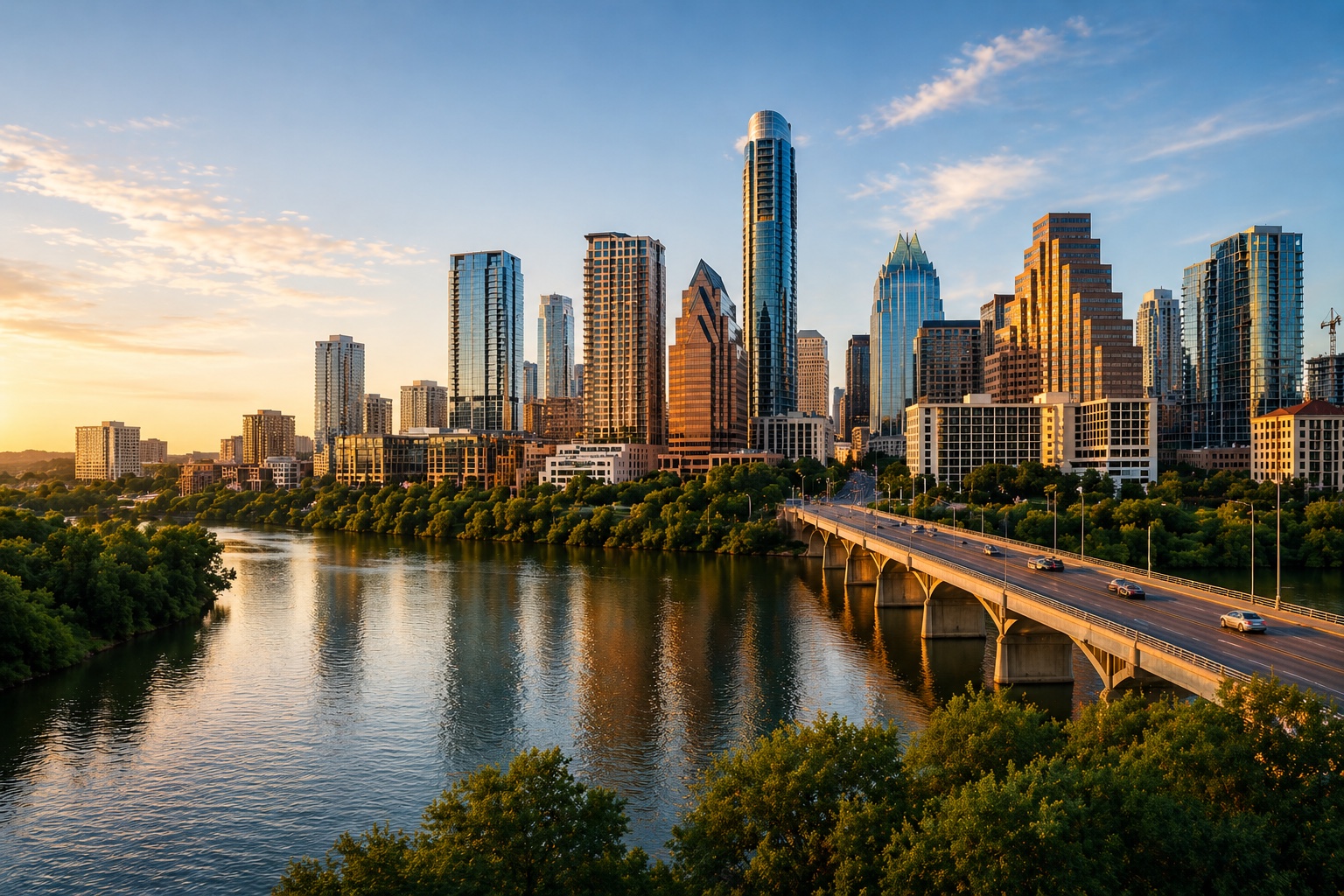
How can you mitigate the I-35 and MoPac commute?

The mitigations that work

Three things that fix it, in order of effectiveness.

1. Live in the dense corridor. The single highest-leverage mitigation is to not have a long commute. Mueller, Hyde Park, East Austin, and South Congress are within roughly 12 minutes of downtown off-peak and 18 to 25 minutes at peak. The housing premium versus Cedar Park or Round Rock is real (roughly 70 to 100 percent on a price-per-square-foot basis), and offsetting it is the commute-time savings, the no-second-car possibility, and the built-in social density. See the neighborhoods page for the rent and home-price math by neighborhood.

2. Test the commute before signing. If you are buying outside the dense corridor, drive the prospective commute at Tuesday 8:15 a.m. and Tuesday 5:30 p.m., both directions, ideally in July (the worst-traffic month, because of school-out alternative commute timing). The peak-hour commute is the experience you will have for the duration of the move. Saturday-at-11 driving is unrelated.

3. Use the toll lanes strategically. The MoPac Express Lane and 183A toll lanes have meaningful per-trip cost ($3 to $11 each direction) and meaningful time savings (10 to 25 minutes at peak). The math works for households on senior IC or staff PM salaries; it does not work for early-career renters. The honest decision rule: if your hourly rate exceeds the per-minute toll cost, take the toll lane every time.

The mitigation that does not work: hoping CapMetro will improve. CapMetro's bus and Red Line commuter rail serve a thin corridor, run on a limited schedule outside peak, and are not a primary commute option for most Austin jobs. Project Connect (the city's planned light-rail expansion) is in political flux as of May 2026 and is not a near-term commute mitigation.

I just averaged 12 mph on my way home today. An hour to go 12 freaking miles. Ridiculous.

Public threads.
Primary data.
Named editor.

That’s Landed.

Closing

The traffic regret is mitigable. The mitigation is the housing decision.

The transplants who report commute satisfaction two years in are almost universally the ones who chose dense-corridor housing. The transplants who report commute regret are almost universally the ones who optimized housing cost over commute time. The Mueller-versus-Cedar-Park decision is, in a real sense, a life-hours-versus-dollars decision; the math depends on how much your awake time is worth to you. Read the full regrets analysis, run the cost calculator against your specific scenario, and check the neighborhoods page for the per-block read.

Nathaniel Peters, Founder & Editor